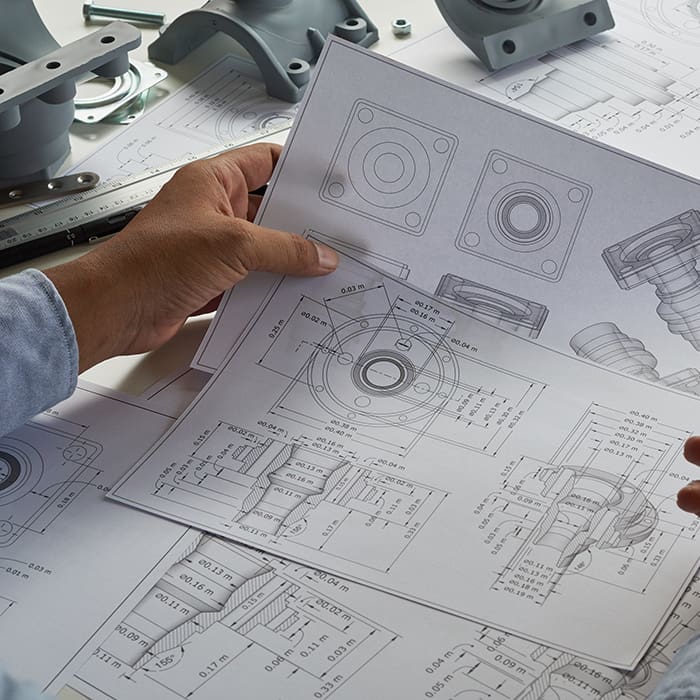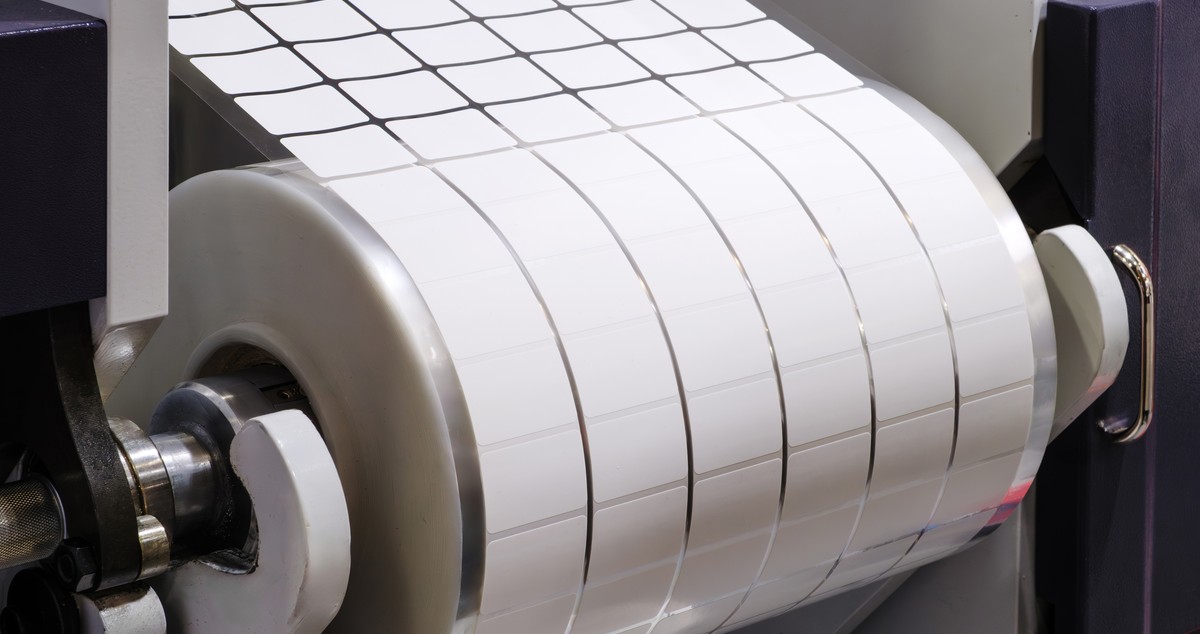

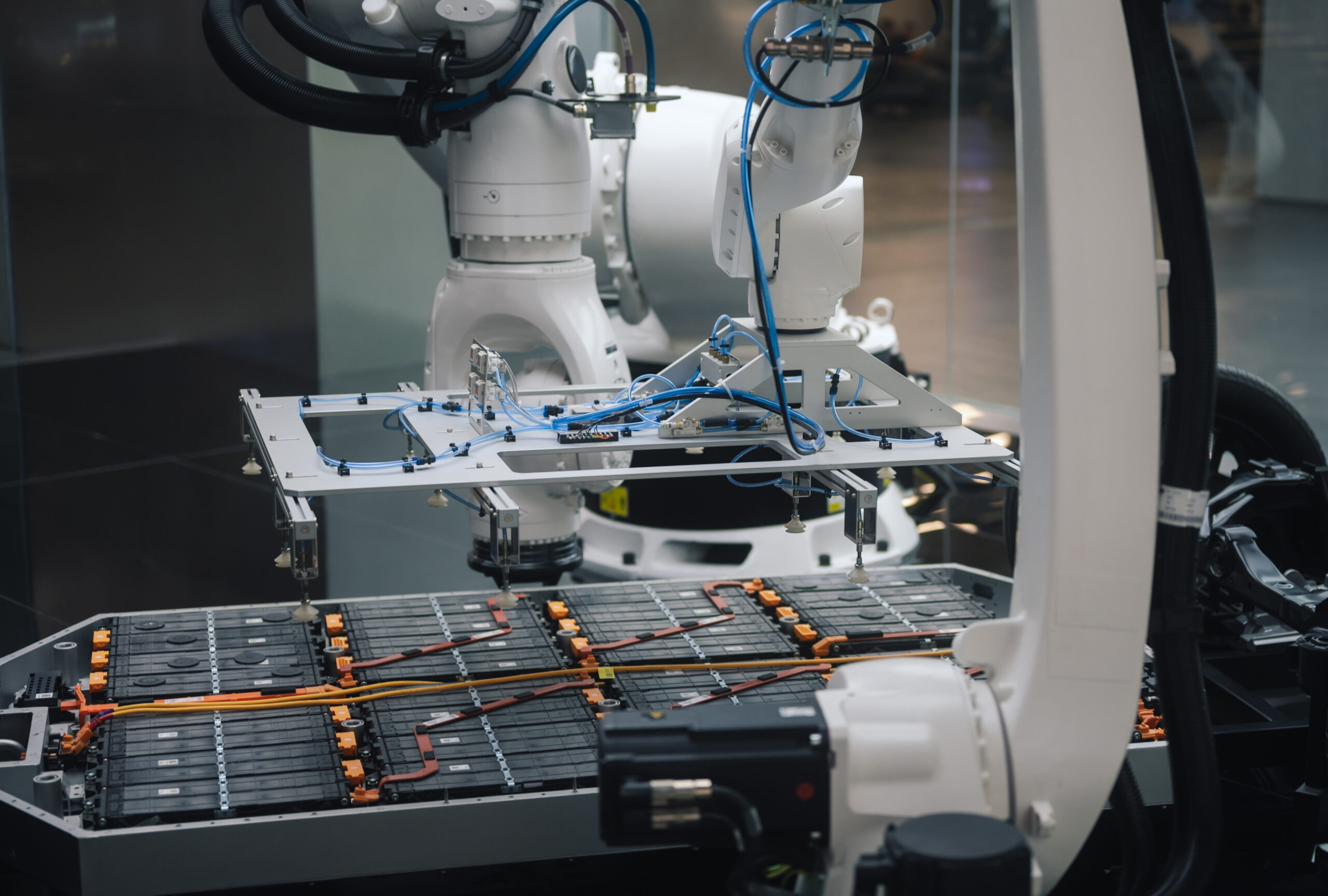
A prototype that performs correctly is not evidence that production will go smoothly.
In precision converting, the gap between prototype success and production failure is one of the most common — and most costly — problems teams encounter. Components that passed every test in development begin failing during validation, or produce inconsistent results at volume, or introduce yield problems that weren't present at low quantities.
The failures are real. But the causes are almost always traceable — and almost always preventable if the right questions are asked before scale-up begins.
The prototype-to-production transition is not a handoff. It is a structured process with specific failure modes. Understanding them before you scale is how you avoid discovering them during validation.
Why the Prototype-to-Production Gap Exists
Prototypes are produced under conditions that are inherently different from production.
In prototype builds:
- Volumes are low, allowing manual adjustment and close oversight
- Materials often come from a single lot, masking lot-to-lot variation
- Process parameters are often tuned by hand for each run
- Environmental conditions are frequently more controlled than standard production
- Tolerance stack-up and yield variability are not yet visible at scale
Production introduces a fundamentally different set of conditions:
- Higher throughput with less manual intervention
- Multiple material lots with natural variation
- Process parameters that must hold consistently across runs
- Environmental variation across shifts, seasons, and facilities
- Yield requirements that expose process capability gaps invisible at low volume
When the convertingConverting is the process of transforming raw materials—such as films, foils, papers, foams, fabrics, and adhesives—into finished or semi-finished products through specialized manufacturing processes. process is not specifically designed and validated for production conditions, these differences produce failures. The five reasons below account for most of them.
Reason 1: Process Parameters Were Tuned for Prototypes, Not Validated for Production
Prototype converting is often iterative. A skilled technician adjusts pressure, temperature, dwell time, or feed rate until the part performs correctly. The result is a working part — but not necessarily a validated process.
What goes wrong at scale:
Production requires that the same parameters produce the same output across every run, every shift, every operator. When process parameters were set empirically for prototypes rather than validated across a defined range, small deviations — equipment variation, operator differences, ambient conditions — push output outside acceptable limits.
What this looks like in practice:
- First production runs perform well; subsequent runs show variation
- Yield drops gradually across production runs without an identifiable cause
- Parts fail at random rather than at consistent failure points
What process validation is supposed to prevent:
Under ISO 13485, converting processes that cannot be fully verified by inspection must be validated — meaning the supplier must demonstrate that the process consistently produces conforming output across defined conditions. This is not the same as producing a good prototype.
Reason 2: Material Lot Variation Was Not Accounted For
Prototypes are frequently built from a single material lot. That lot may perform at the high end of specification — consistent adhesion, tight thickness tolerance, clean release liner behavior. The prototype performs well because the material did.
What goes wrong at scale:
Production draws from multiple lots. Natural lot-to-lot variation in adhesive chemistry, coatingA functional layer applied to a substrate to add properties such as sealability, barrier, anti-fog, or slip. weight, substrate thickness, and liner release force introduces variability that the prototype never exposed. These are not abstract differences — they affect specific converting steps in specific ways. Coating weight variation changes adhesive bond strength in laminating. Liner release force variation affects die cuttingDie cutting is a converting process that uses a shaped metal die or blade to cut flexible materials into precise shapes, components, or finished parts. This process is commonly used in roll-to-roll manufacturing to produce high-volume parts with consistent accuracy. registration and part separation. Thickness tolerance differences alter nip pressure, compression, and layer alignment in multilayer constructions. If the converting process was optimized for the best-case material lot, it will underperform — or produce failures — when average or low-end lots are introduced.
What this looks like in practice:
- Performance is consistent within a lot but varies between lots
- Incoming material passes specification but produces different output in the converting process
- Failures correlate with material lot changes but are initially misdiagnosed as process problems
What material qualification is supposed to prevent:
A structured production process includes incoming material qualification and process parameters established across the full specification range — not optimized for the best-performing prototype lot. This requires production trials across multiple lots before volume release, not after the first failure.
Reason 3: Tolerance Stack-Up Was Not Evaluated at Production Volume
At prototype quantities, individual parts can be inspected closely and marginal parts can be identified and set aside. Tolerance stack-up — the accumulation of small dimensional variations across multiple layers or components — is present but not yet visible as a yield or consistency problem.
What goes wrong at scale:
At production volume, tolerance stack-up becomes a yield driver. Each layer in a multilayer construction contributes dimensional variation. Each converting step — laminating, die cutting, slittingCutting a wide web into narrower rolls with controlled edge quality, winding tension, and roll build. — adds its own tolerance. When those tolerances are not managed, the combined variation across a stack can push assembled components outside acceptable limits even when each individual step is within spec.
What this looks like in practice:
- Individual components pass inspection but assembled performance degrades
- Yield drops specifically in multilayer or multi-step components
- Dimensional failures appear at assembly that were not present during prototype
What design for manufacturability is supposed to prevent:
Evaluating tolerance stack-up before committing to a production design — and ensuring the converting process is capable of holding the required tolerances at volume — is a core part of design for manufacturability (DFM). A converting partner that participates in DFM reviews can identify these risks before tooling is committed.
Reason 4: Environmental Controls Applied During Prototyping Were Not Replicated in Production
Prototypes are frequently built in controlled environments — engineering labs, sample rooms, or dedicated prototype areas — where temperature, humidity, and contamination are managed more carefully than in standard production.
What goes wrong at scale:
Production converting may occur in environments that differ from prototype conditions. For adhesive-sensitive components and multilayer constructions, those environmental differences affect adhesive performance, bond formation, and dimensional stability in ways that are difficult to detect before they produce failures.
What this looks like in practice:
- Prototype performance cannot be replicated in production
- Yield variation tracks with environmental conditions — shift changes, seasonal humidity, production floor location
- Batch-to-batch inconsistency without a clear process or material cause
What cleanroom and environmental control are supposed to prevent:
For applications where contamination or environmental variation directly affects performance, the converting environment is a production variable — not a prototype nicety. A supplier that builds prototypes in controlled conditions but converts production in standard environments introduces risk at the transition point.
Reason 5: Process and Tooling Changes During Development Were Not Formally Controlled
Prototype development is iterative by nature. Parameters get adjusted, tooling gets modified, materials get substituted, and construction sequences get revised — often multiple times before a working part is produced. In a prototype context, that flexibility is appropriate and necessary.
The problem occurs when those changes are not captured in controlled documentation before production begins.
What goes wrong at scale:
Without formal change control during the development-to-production transition, the production process is not the validated prototype process — it is an undocumented approximation of it. Tooling adjustments made during pilot runs are not evaluated for their effect on process capability. Material substitutions made for convenience during prototyping are not qualified for production. Validation protocols are incomplete or skipped because the team is confident the part works.
When failures occur in production, there is no controlled baseline to compare against. Changes cannot be traced. Root cause analysis points in multiple directions simultaneously. The supplier cannot determine whether the failure is a production anomaly or a symptom of a process that was never formally validated in the first place.
How this shows up in production:
- Production yields are lower than prototype yields without a traceable cause
- The same failure appears across multiple production runs but cannot be linked to a specific process variable
- Regulatory or quality audits identify that production records do not match the development history
- Corrective actions address symptoms but cannot confirm root cause because the baseline is unclear
What formal change control and transition documentation are supposed to prevent:
Under ISO 13485, changes to processes, materials, and tooling must go through a defined change control process — with documented evaluation, approval, and, where required, revalidation. This requirement exists specifically to prevent the scenario described above: a production process that drifted from its validated state during development without a traceable record of what changed and why.
A supplier structured for production treats every significant change during pilot and development as a formal event — documented, evaluated, and either approved or reversed — so the production baseline is unambiguous when volume begins.
How These Failures Connect to Supplier Evaluation
Most of the failures described above are not detectable by inspecting the supplier’s facility or reviewing their equipment list. They are detectable by asking the right questions about how the supplier manages the transition from development to production — and by knowing what a strong answer looks like versus a warning signal.
How are process parameters validated for production, not just optimized for prototypes?
A supplier operating at production level defines validation ranges, documents protocols, and can demonstrate repeatability across multiple runs and operators. A supplier still operating at prototype level describes “dialing in the process” or “adjusting as we go.” The language signals whether the supplier treats process parameters as validated specifications or as starting points subject to change.
How are incoming materials qualified across lot variation?
A structured supplier runs qualification trials across multiple material lots before production release and sets process parameters to accommodate the full specification range. A less structured supplier sets parameters to the lot that worked in prototyping and hopes subsequent lots perform similarly.
How is tolerance stack-up evaluated before production tooling is committed?
This question surfaces whether the supplier participates in DFM reviews or only evaluates parts after tooling is built. If the supplier cannot describe how they evaluate accumulated variation across converting steps before tooling is finalized, that evaluation is not happening.
What environmental controls are applied during production converting, and how do they compare to prototype conditions?
The answer should describe specific controls — cleanroom classification, temperature and humidity monitoring, material handling procedures — not general statements about “controlled environments.” If production conditions are less controlled than prototype conditions, that gap is a risk.
What does the formal change control process look like during development and transition?
A supplier with a functioning quality system can describe specific steps: how changes are documented, who approves them, and what triggers revalidation. A supplier without one will describe an informal process or struggle to distinguish between changes that were formally evaluated and those that were not.
Why Advantage Converting
For teams evaluating converting partners ahead of a production transition, the question is not whether the supplier can build a prototype. It is whether they are structured to prevent the five failure modes described above.
Advantage Converting operates precision converting processes — die cutting, multilayer laminating, slitting and rewinding, and cleanroom converting — governed by an ISO 13485:2016-certified quality management system that directly addresses each failure mode:
Process validation (Reason 1) — Converting operations where output cannot be fully verified by inspection are validated before production release. Process parameters are defined across a validated range, not tuned empirically for a single prototype build.
Material qualification (Reason 2) — Incoming materials are qualified and lot-tracked. Production process parameters are established to accommodate the full specification range across multiple lots — not optimized for the best-case prototype material.
Tolerance and DFM review (Reason 3) — Advantage Converting conducts DFM evaluation during prototype and pre-production stages, evaluating tolerance stack-up across converting steps before production tooling is committed.
Environmental controls in production (Reason 4) — ISO 14644-compliant cleanrooms (ISO 7 and ISO 8) are integrated directly into converting operations. The environmental controls applied during prototype builds are maintained in production — not relaxed at scale.
Change control and transition documentation (Reason 5) — Process, tooling, and material changes during development are managed through formal change control. The production baseline is documented, controlled, and traceable — not reconstructed from memory after failures appear.
As a 3M Preferred Converter, Advantage Converting works with advanced adhesive materials and multilayer constructions across regulated and high-performance applications.
This designation reinforces Advantage Converting’s experience with advanced adhesive materials and multilayer constructions, supporting application development across medical, electronics, and industrial converting.
Advantage Converting produces precision components and sub-assemblies where the transition from prototype to production is a managed, documented process — not an assumption.
Evaluate Whether Your Converting Partner Is Structured for Scale
A supplier that performs well in prototype is a necessary condition. It is not a sufficient one.
The transition from prototype to production requires a supplier that is structured for it — with validated processes, controlled environments, material qualification protocols, and a quality system that governs the transition as a formal program.
→ Evaluate whether a converting partner is structured to support your production transition
→ Assess whether a supplier can meet your scaling and consistency requirements
Looking for more detail? Explore answers to common questions and related resources below.
Frequently Asked Questions
Why do components that pass prototype testing fail in production?
Prototype builds typically use a single material lot, allow more manual adjustment, and occur in more controlled conditions than production. These differences mask process and material variation that only becomes visible at volume.
What is process validation and why does it matter for scaling?
Process validation is the documented demonstration that a converting process consistently produces conforming output under defined conditions. Without it, production performance depends on the same conditions that existed during prototyping — which are rarely replicated exactly at scale.
How does material lot variation affect production?
Adhesive chemistry, coating weight, substrate thickness, and liner release force all vary naturally between lots. A process optimized for one lot may underperform with another. Production processes need to be qualified across the range of incoming material variation, not just against a single prototype lot.
What is tolerance stack-up and when does it become a problem?
Tolerance stack-up is the accumulation of dimensional variation across multiple layers or converting steps. At low prototype volumes it is manageable; at production volume it becomes a yield driver. Evaluating stack-up before committing to production design and tooling is part of a structured DFM process.
When should a converting partner be involved in the prototype-to-production transition?
As early as possible — ideally before prototype tooling is committed. Early involvement allows the converter to identify DFM risks, establish process parameters across the full material specification range, and build the documentation foundation the production transition requires.
Frequently Asked Questions
Q: Why do components that pass prototype testing fail in production?
Prototype builds typically use a single material lot, allow more manual adjustment, and occur in more controlled conditions than production. These differences mask process and material variation that only becomes visible at volume.
Q: What is process validation and why does it matter for scaling?
Process validation is the documented demonstration that a converting process consistently produces conforming output under defined conditions. Without it, production performance depends on the same conditions that existed during prototyping—which are rarely replicated exactly at scale.
Q: How does material lot variation affect production?
Adhesive chemistry, coating weight, substrate thickness, and liner release force all vary naturally between lots. A process optimized for one lot may underperform with another. Production processes need to be qualified across the range of incoming material variation, not just against a single prototype lot.
Q: What is tolerance stack-up and when does it become a problem?
Tolerance stack-up is the accumulation of dimensional variation across multiple layers or converting steps. At low prototype volumes it is manageable; at production volume it becomes a yield driver. Evaluating stack-up before committing to production design and tooling is part of a structured DFM process.
Q: When should a converting partner be involved in the prototype-to-production transition?
As early as possible—ideally before prototype tooling is committed. Early involvement allows the converter to identify DFM risks, establish process parameters across the full material specification range, and build the documentation foundation the production transition requires.