
Definition
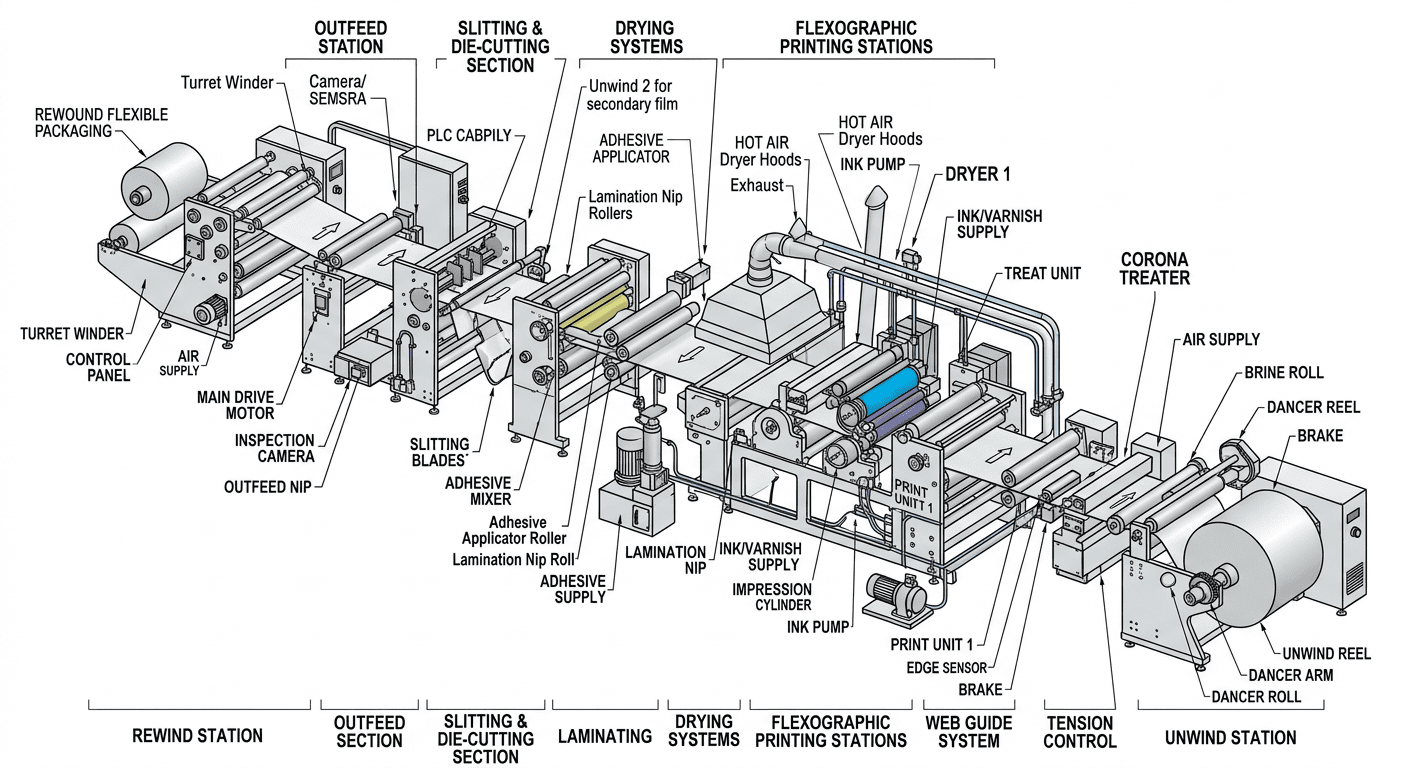
Converting is the process of transforming raw materials—such as films, foils, papers, foams, fabrics, and adhesives—into finished or semi-finished products through specialized manufacturing processes. These processes typically include slitting, laminating, coating, die cutting, rewinding, printing, and roll-to-roll processing. Converting enables manufacturers to customize materials so they meet specific functional, structural, or regulatory requirements across industries such as medical devices, electronics, industrial manufacturing, and packaging.
Applications
- Medical Devices – converting adhesive films, foams, and laminates into precision die-cut components used in diagnostic devices, wearable sensors, wound care products, and sterile packaging.
- Industrial Manufacturing – producing gaskets, insulation materials, protective films, and sealing components used in machinery, construction, and transportation equipment.
- Electronics & Electrical – converting films and foams into EMI shielding, insulation layers, thermal management materials, and ESD packaging solutions.
- Packaging & Flexible Materials – laminating and slitting materials into roll stock used in automated packaging systems.
- Automotive Components – converting tapes, foams, and specialty materials into vibration dampening, insulation, and protective parts used in vehicle assemblies.
Benefits
- Material Customization – allows manufacturers to tailor materials for specific performance requirements such as barrier protection, adhesion, flexibility, insulation, or thermal resistance.
- Precision Manufacturing – processes like die cutting and laminating allow highly accurate production of complex shapes and multilayer materials.
- Improved Production Efficiency – roll-to-roll converting enables high-speed manufacturing for large-scale production.
- Reduced Material Waste – precision cutting and slitting minimize excess material and improve cost efficiency.
- Enhanced Product Performance – combining materials through lamination or coating can improve durability, barrier protection, and functionality.
- Regulatory Compliance – Controlled converting environments (such as cleanroom manufacturing) support compliance with standards required for medical and electronics applications.
Industry Examples
- Medical Industry: converting is used to manufacture multilayer adhesive components used in wearable medical devices. Cleanroom converting ensures contamination control and compliance with ISO 13485 manufacturing standards.
- Industrial Manufacturing: heavy-duty gasket materials are converted through slitting, laminating, and die cutting to produce sealing components for pumps, valves, and industrial machinery.
- Electronics Industry: specialized insulating films and conductive materials are converted into die-cut components used in smartphones, circuit boards, and battery assemblies.
- Packaging Industry: flexible films are laminated, printed, slit, and rewound into roll stock that can be used on automated packaging lines such as form-fill-seal machines.
FAQ
Q: What is the purpose of converting in manufacturing?
A: Converting allows raw materials to be modified and transformed into functional components or finished products that meet specific performance requirements.
Q: What materials are commonly converted?
A: Films, foams, papers, fabrics, rubbers, adhesives, foils, and specialty laminates are frequently used in converting operations.
Q: What industries rely on converting services?
A: Industries such as medical devices, electronics, automotive, industrial manufacturing, and flexible packaging all rely on converting processes.
Q: What equipment is used in converting operations?
A: Typical converting equipment includes laminators, slitters, rewinders, die cutting presses, coating machines, and roll-to-roll processing systems.
Q: Why are cleanrooms used in some converting processes?
A: Cleanrooms help control airborne particles and contamination, which is essential for manufacturing sensitive products used in medical devices and electronics.